Dennis Berardi, founder of Mr. X, has been a driving force in the world of visual effects for nearly 30 years. His credits span a wide range of projects—from Death Race and Monster Hunter to Carrie and In the Lost Lands. As a frequent collaborator of Guillermo del Toro, Dennis has supervised The Shape of Water, Nightmare Alley, and of course, Frankenstein.
Dennis, this is another chapter in a long creative partnership with Guillermo del Toro. How did your shared visual language influence the VFX approach on Frankenstein?
My visual language with Guillermo has been built over years of making the “impossible” feel hand-made and emotionally legible. We start from story, not spectacle. On Frankenstein, that meant designing every VFX choice to preserve empathy, anatomy, and texture—the “patina of reality” Guillermo loves. We prioritized physical builds, special effects, and real lensing, then used CG to extend, enhance, support, and protect performances. When we went all-digital, we were absolutely grounded in physically based VFX.
We agreed early on a few rules: lighting must be motivated from a single source and be period-true; and silhouettes have to be read in two beats—the first for shape, the second for feeling. Our creature and character work was rigorously anatomical, informed by motion studies, so the audience senses weight and breadth before they notice technique. Color and lensing pipelines were locked with cinematography and production design, so CG carried the same optical “errors” as the photographed world—halation, lens breathing, and period glass characteristics.
The net effect is restraint. You shouldn’t see the VFX; you should feel the drama. My job as the VFX Supervisor was to make hundreds of artists, departments, and tools conform to that single voice so the film plays like one handcrafted piece—faithful to Guillermo’s storytelling and to the humanity at the center of the monster.


How was the VFX work divided among the different studios involved, and what were the main factors that guided your choice of vendors?
Guillermo likes to work fast. He’ll shoot a scene and quickly edit it to see if it’s working or where it might be deficient. Just like with previous films, we wanted to have a strong in-house team that could plug in and turnaround designs, mock-ups, test composites, pre-visualization, and post-visualization in hours or days, not weeks or months. This was the Herne Hill/Mr. X team, which was headed up by Brandon Schaafsma (Associate VFX Supervisor). In most cases, Mr. X went on to complete shots where there was good traction.
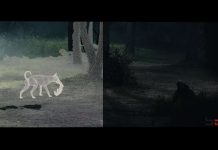
At the same time, we needed to start development on some very complex sequences that required a lot of time. Herne Hill/Mr. X worked on all the exterior environments from the arctic icescapes to the mountains, the water, the tower and surrounding sea cliff landscapes, along with the creature creations of the butterflies and the flayed man. At the same time, ILM worked on the wolves, deer, sheep, mice, and some key shots like the “spark of life” shot (the inner body journey) and the Dark Angel moments, among others. Guillermo has had great experiences with ILM in the past, especially on Pacific Rim. So, given the volume with over 2 hours of full-on visual effects, we thought that this would be a good way to allocate the work:
Herne Hill/Mr. X: 950 VFX shots (environments, mountains, skies, tower destruction, icescapes, fire, destruction, digital doubles, butterflies, the flayed man)
ILM: 180 VFX shots (wolves, deer, mice, inner body, the Dark Angel, the creature underwater)
Ticket VFX: 46 VFX shots (demodernization, rose petals, beetle shot, supporting VFX)
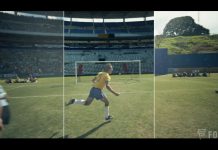
In-house team: 200 shots (simpler composites, retimes with paint fixes, editorial matches like split screens, etc.)
The goal was to have one unifying voice across many hands—clear ownership, fewer inter-studio handoffs, and a shared commitment to invisible craftsmanship.


What was Guillermo’s vision for the overall look and tone of the film’s visual effects, and how did you translate that into your pipeline and planning?
Guillermo asked for “handmade realism”— VFX that feel photographed, period-true, emotional, physically-based, and textural. The mandate was restraint: protect performance and let effects serve character and theme. Texture, atmosphere, and emotion over spectacle.
Let’s start with the environments — the frozen landscape and the ship trapped in ice are some of the film’s most striking visuals. How were those sequences conceived and executed?
I’ve worked on films with a lot of fully digital or digitally extended/enhanced environments before. Frankenstein is different. The environments not only establish a location, but they also need to set an emotional tone and also be fully immersive. There are no throwaways.
For the frozen landscape, Tamara Deverell (Production Designer) and Guillermo were inspired by historical photos of excursions to the North Pole – especially the images of Shakelton’s adventures. There are these incredible images of ships literally frozen into the ice and a vast expanse of ice that goes to the horizon. That was the foundational premise.
For the ship and its surroundings, the art department constructed a full-scale ship on our backlot, which was actually a parking lot. The ship was completed on three sides – the bow, port side and stern. The ship was also built on a gimbal that was able to rock the ship 9 degrees to and fro. We dressed the immediate surroundings with white blankets and chipped ice, which allowed tighter shots against the ship to give the illusion that we were on the ice – this really worked practically. For wider shots, the icescape was extended digitally, and every sky was replaced with a sense of moodiness that was based on a library of panoramas that we shot throughout production.


Other key environment work included the mountains surrounding Frankenstein’s Villa and the Mill House. These were based on photogrammetric photography from drones in Kananaskis, Alberta.
But the most comprehensive environment was the world surrounding Frankenstein’s Tower and the Lab. Tamara and Guillermo had an early scout in Scotland and found a seaside beach called Seacliff, with a rocky peninsula jutting out into the water. This was the inspiration for the environment where the tower would live. So, we did a full survey of the location complete with long-range LiDAR and Photogrammetry scans from a drone. We initially created the environment in Unreal Engine so we could quickly get a feel for it and show Guillermo some camera views where he could pick his hero angles. Tamara’s team built the first 20 feet of the tower out in a field north of Toronto, which we would extend digitally. For wider shots, we photographed a miniature version of the tower as a plate reference, which we enhanced or replaced digitally when needed, then added the world around it including moody skies.


What were the main challenges in blending live-action elements, practical sets, and digital extensions to create the Arctic environment?
The arctic environments were a challenge, especially since we shot the frozen icescapes in a parking lot! For every shot, the SPFX team dressed the foreground with chipped ice. Basically, any area where the actors needed to physically walk got a beautiful dressing of snow/chipped ice. We had travelled up to North Bay, Ontario to a frozen over lake to shoot a reference library of the ice and skies at various times of day. This gave us a good basis for our extensions. Ultimately, we created multiple full 360-degree environments for the icescape around the ship, the icescape around the tent, the icescape around ground zero dynamite blast area, etc. A big challenge was to match into Dan Lausten’s beautiful photography while still offering Guillermo the scope. Things seemed to fall into place when we started experimenting with skies inspired by the painter John Atkinson Grimshaw, where the moon dramatically backlights moody clouds that sometimes appear almost black. Dan employed a big single-source lighting philosophy for the night work. He also used a lot of black screen as negative fill and shot everything at a T-stop of 4. He also played a lot with mixing the cools of the auroral borealis with the warmth of localized fire light. So, it all became a little complicated to match. But we painstakingly surveyed his lighting set-ups and recreated them in our digital lighting paradigm on a shot-by-shot basis. So, in the end we got there, but the skies unified the environments.


The storm that brings the Creature to life is such an iconic moment in the Frankenstein mythology. How did you approach designing and simulating that sequence?
The Creation Sequence is probably what I’m most proud of in this film. Guillermo really wanted to deliver a heightened and emotional experience for the creation scene. He and Guy Davis storyboarded the sequence, and we created an animatic as a communication tool for all departments. Every department understood how important this scene was going to be for the audience, and we employed every technique like an orchestra playing for Guillermo as our Conductor. Production Design, Cinematography, Stunts, VFX, SPFX, Actors, Hair, Make-up, Costumes, all working together and bringing their absolute best.


We worked for months on the storm, rain simulations, lightning simulations, and the environment work at the tip of the tower where Victor installs the collector rods. We shot that on a blue screen stage, and Oscar did his own stunt by climbing the spire 30 feet in the air. We blasted him with SPFX wind fans and pelted him with rain FX on set. He was a trooper and did the climbing over and over again until Guillermo was satisfied.


Our mandate was to be absolutely invisible with the visual effects in this scene, even though every shot was a visual effect. So, we focused on being technically tight and supporting the performances creatively. We failed a lot in the early iterations of our lightning work, as it was not looking chaotic or organic. Once we introduced randomness and treated the lightning like a massive energy discharge in a localized area, we started to make progress.


Can you walk us through the work done on Victor Frankenstein’s castle — from the miniature model to the large-scale destruction?
Yes, we call it the Lab Tower. Guy Davis (Head of Concept Design) was inspired by the Wallace Monument in Stirling, Scotland. Guillermo then wanted to turn it into an abandoned water works, which was 400 feet tall, since water is such an important thematic device for him in the film. Guy Davis and Tamara Deverell started sketching out ideas for the tower. One of the biggest challenges was unifying all the exterior and interior areas of the tower such that they all felt like they lived within the same tower. There is a grand foyer on the main level, two underground chambers – a drainage area where Victor chains up the monster, with vaulted ceilings, as well as an ice chamber for ice storage. Then there is the Lab, Victor’s quarters, the top of the tower with a big machine that is the electrical conductor of lightning energy. Then, of course, the very tip of the tower is where the lightning collector rods attract the lightning during the storm.


We brought on José Granell and Magic Camera Company very early on to start exploring the idea of models/miniatures for the tower destruction. José is a real talent and probably only a handful of people in the world who can do this kind of work. As I said, Guillermo insisted on a hand-made approach as much as possible. We decided on a scale of 1/20th for the tower that we would explode and collapse. José thought that would work since it would allow for the miniaturized version of the tower to be 20 feet tall, so we’d have a fighting chance for the tower and collapsing debris to scale on screen and feel big. He built two full towers, working in collaboration with me, Tamara and Brandt Gordon (Senior Art Director) so that every detail of the design was carried through to the model at miniature scale. It was a slow, tedious, but important process. We filmed the models in the U.K. at an airfield and did all as exterior photography with natural light. The explosions and the collapse went off without a hitch, and Guillermo was very happy. The elements provided us with the foundational building blocks of all the tower-collapsing shots.


Animals are also a key part of the film — particularly the wolves. What was your approach to creating and animating these creatures?
Yes, the animals are a key aspect of this film. They bring the natural world into play for our Monster to interact with. We have wolves, deer, mice, sheep, ravens, and butterflies. The approach was to have taxidermy stuffed versions of the animals on set. These are anatomically correct versions of the real animals. This was great for lining up shots in terms of composition and also provided great lighting reference.


Did you rely on any real animal reference or motion capture for the wolves, or was it entirely keyframe animation?
I’m a big believer in gathering as many references as one can find. For the wolves, we started with doing a deep search on what was available for Gray Wolves and Timber Wolves, which was eye-opening. They are such beautiful animals, and they are very complex in the way they move and their anatomy. They have a double coat, for example. The undercoat is a dense, soft, wool-like layer close to the skin; it’s the insulating layer. The outer coat is course and made up of guard hairs that shed water and snow and block wind.
We worked with an expert wolf trainer named Andrew Simpson to cast the wolves that Guillermo wanted. Then we started to previsualize the big attack sequence in the Mill House. This gave Andrew a good road map for the types of performances we wanted. He started to train the wolves to do some of these key moves so that we could film them for reference. Also, the ILM team went out to Andrew’s ranch and studied the wolves for a few days and took thousands of photos, and video reference.


For filming with the actors, we had stunt performers in blue suits holding stuffy wolf heads. This allowed Jacob to have a physical interaction on set for every shot. We stayed quite close to the previsualized sequence for the main unit filming. Then, on our Second Unit, which was a reduced unit so the wolves would not be spooked, we filmed as many of the trained moves that Andrew was able to perform with the real wolves. It was a great process, and the reference – in situation – was a great help. Ultimately, the wolves are all digital, but for one shot when they exit the Mill House. But I could not imagine doing it any other way.


Let’s talk about the Creature itself — how did you balance the practical makeup effects with the digital augmentation to enhance its physical damage and emotional expression?
Mike Hill and Guillermo designed the Creature to be beautiful. It’s beauty that is born out of ugliness – a man literally made from body parts in a battlefield. The make-up application took 8 or 9 hours per day. Jacob Elordi literally transformed into the Creature not only physically but emotionally as well. Jacob’s performance is mind-blowing. He’s vulnerable and naturalistic. He’s confused, but also animalistic. He’s curious, then sometimes there are moments of pure rage. He grows mentally and emotionally from a newborn to a sophisticated adult. So, we had to keep true to Jacob’s performance and Mike’s make-up. We had a very light touch on the make-up, which looked great under Dan Lausten’s lighting. There were just a few moments where we had to go all digital with the Creature, like when he jumps down the drainage chute to escape the fiery collapsing tower, but for the most part, we only did slight adjustments and enhancements. For example, Guillermo wanted him to have a “cat-eye” effect where the light enters the fully dilated pupil and bounces off the back off the retina and glows. We did this a lot as Guillermo wanted the Creature to appear more naturalistic or like a creature of the night. The other work on the Creature included fixing some folds of the silicone and deepening the grooves to help tell the story that he’s made of pieces. With that said, Mike Hill’s work is brilliant and made our jobs easy in this area.

Were there specific challenges in ensuring that the visual effects on the Creature remained subtle enough to preserve the actor’s performance?
It was so important to preserve Mike’s brilliant make-up, Jacob’s performance, and Dan’s lighting. So, we exercised a great deal of restraint with the creature. It was mostly touch-ups and the cat-eye effect. There is a scene where the Creature is splashed with battery acid and burned – this happens as the tower is exploding and about to collapse. We did the battery acid splash as a Houdini fluid simulation and revealed burn marks on the Creature’s body by projecting paint patches of burns onto the match-moved geo of the Creature. Then we carried that digitally for continuity for the rest of the sequence. As I said above, when he jumps out of the chute, we take the Creature over entirely digitally with ILM’s team. But we did shoot a 1/6th puppet coming out of a 1/6th drainage chute. It was a great reference.
How long have you worked on this show?
Two and a half years. But Guillermo has been speaking to us about Frankenstein for over a decade! It’s a film that he’s wanted to make for 40 years.
What’s the VFX shots count?
The VFX shot count is as follows:
1,176 VFX shots.
200 additional VFX-based re-times and re-speeds.
2 hours of visual effects since the average shot duration was quite long (over 6 seconds per shot).


Dennis, how did it feel to bring Mr. X back under your own ownership after its years within Technicolor?
It feels great. Mr. X was always about craft and a bespoke and design-based boutique experience for filmmakers. It was never supposed to be a volume shop. It’s good to bring it back to its roots with a bunch of the “OG” Mr. Xers right by my side.
What is your next project?
The film is called The Boy in the Iron Box. Guillermo and Miles Dale are Producers, and David Prior is the Director. We worked with David on his last film called The Empty Man. It’s an exciting project based on a book written by Guillermo and Chuck Hogan. Much of the Frankenstein crew is back at it, including Mike Hill, Guy Davis, and many other talented members.
A big thanks for your time.
WANT TO KNOW MORE?
Mr. X: Dedicated page about Frankenstein on Mr. X website.
ILM: Dedicated page about Frankenstein on ILM website.
© Vincent Frei – The Art of VFX – 2025